
Why NCAHP Alignment is a Game-Changer for Master for Nutrition & Dietetics Students
Overview The notification of the National Commission for Allied and Healthcare Professions (NCAHP) Act in 2021 by the Government of India marks a historic turning point for nutrition education. For students at the Symbiosis School of Culinary Arts and Nutritional Sciences (SSCANS), this alignment is not just a regulatory update—it is a total "game-changer" for their professional future.
The Power of Standardization Previously, nutrition curricula varied significantly across India. The NCAHP Act introduces the “One Nation, One Curriculum” approach. This ensures that every student, regardless of where they study, meets the same high-level standards of training. This standardization moves the field away from scattered skill-based education toward a competency-based, patient-centric, and futuristic curriculum.
Professional Legitimacy and Mobility Alignment with NCAHP provides students with:
- Professional Legitimacy: You are recognized as a formal healthcare professional under one of the 10 broad categories of allied health.
- Global and National Mobility: Standardized credentials make it easier to practice across different Indian states and establish credibility in internationally comparable systems.
- Regulatory Compliance: Being part of an aligned program ensures you are on the right side of upcoming laws governing healthcare practice in India.
The Gateway to Licensure Perhaps the biggest shift is the introduction of a licensure exam. Graduates from NCAHP-aligned programs like the Master’s at SSCANS will be eligible to register on the national portal, effectively gaining a "license to practice." This distinguishes qualified professionals from those with unregulated certifications.
Clinical Hours, Competencies & Curriculum: What NCAHP Really Means for Your Master of Nutrition and Dietetics Journey at SSCANS
A Practical-Heavy Pedagogy The Master’s journey at SSCANS is designed to be intensive and "experiential." This means you spend less time reading about nutrition and more time practicing it. The curriculum uses a 60:40 ratio where laboratory and field performance carry more weight than final written exams.
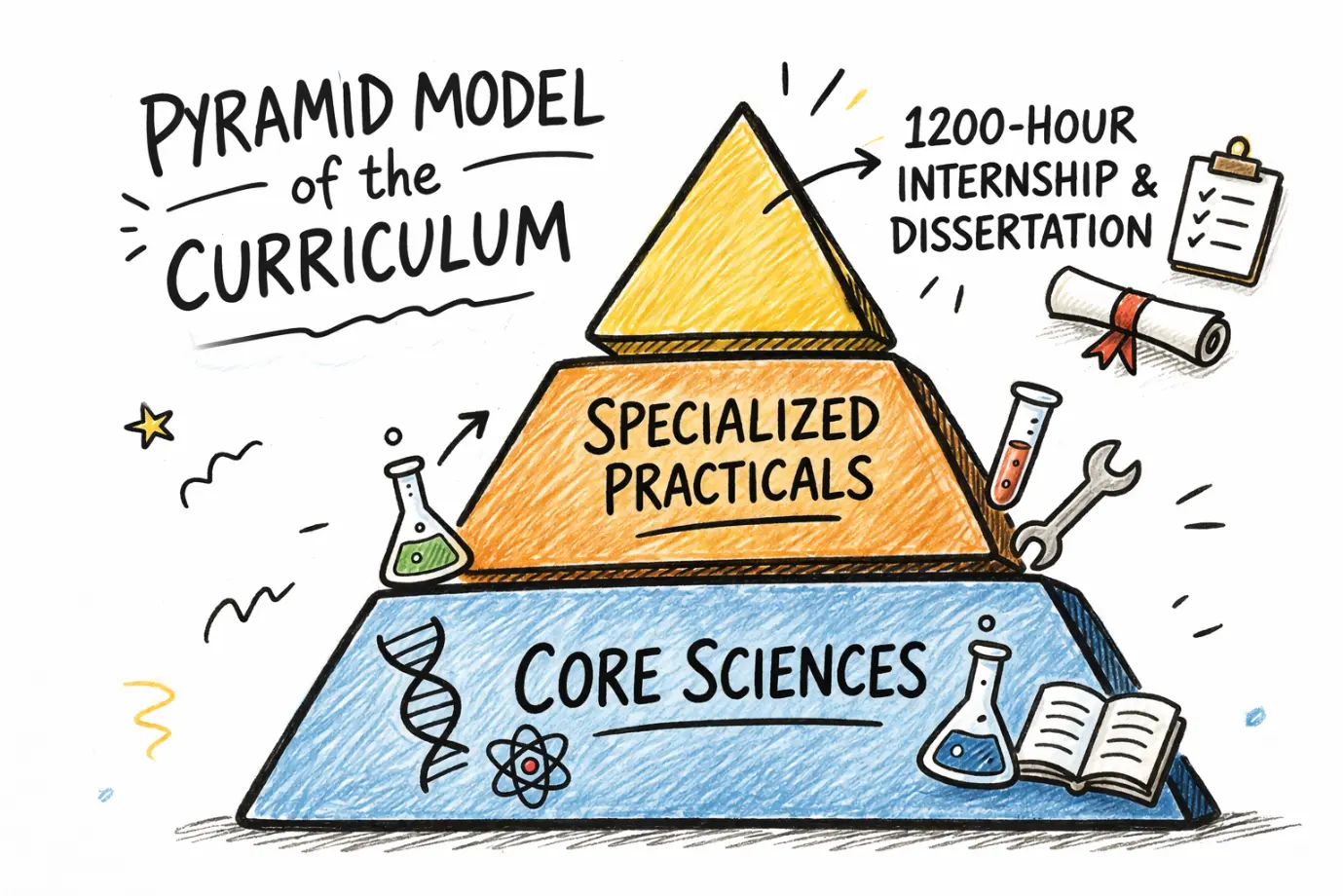
The Magic Number: 1200 Hours Under NCAHP regulations, a Master’s program must allocate at least 50% of total credits to supervised clinical and practical training. At SSCANS, this translates to approximately 1000 to 1200 hours of hands-on experience spread across hospitals, specialty clinics, and community settings.
Curriculum Breakdown
- Core Labs: Specialized practicals in nutritional biochemistry, food product development (FDP), and medical nutrition therapy (MNT).
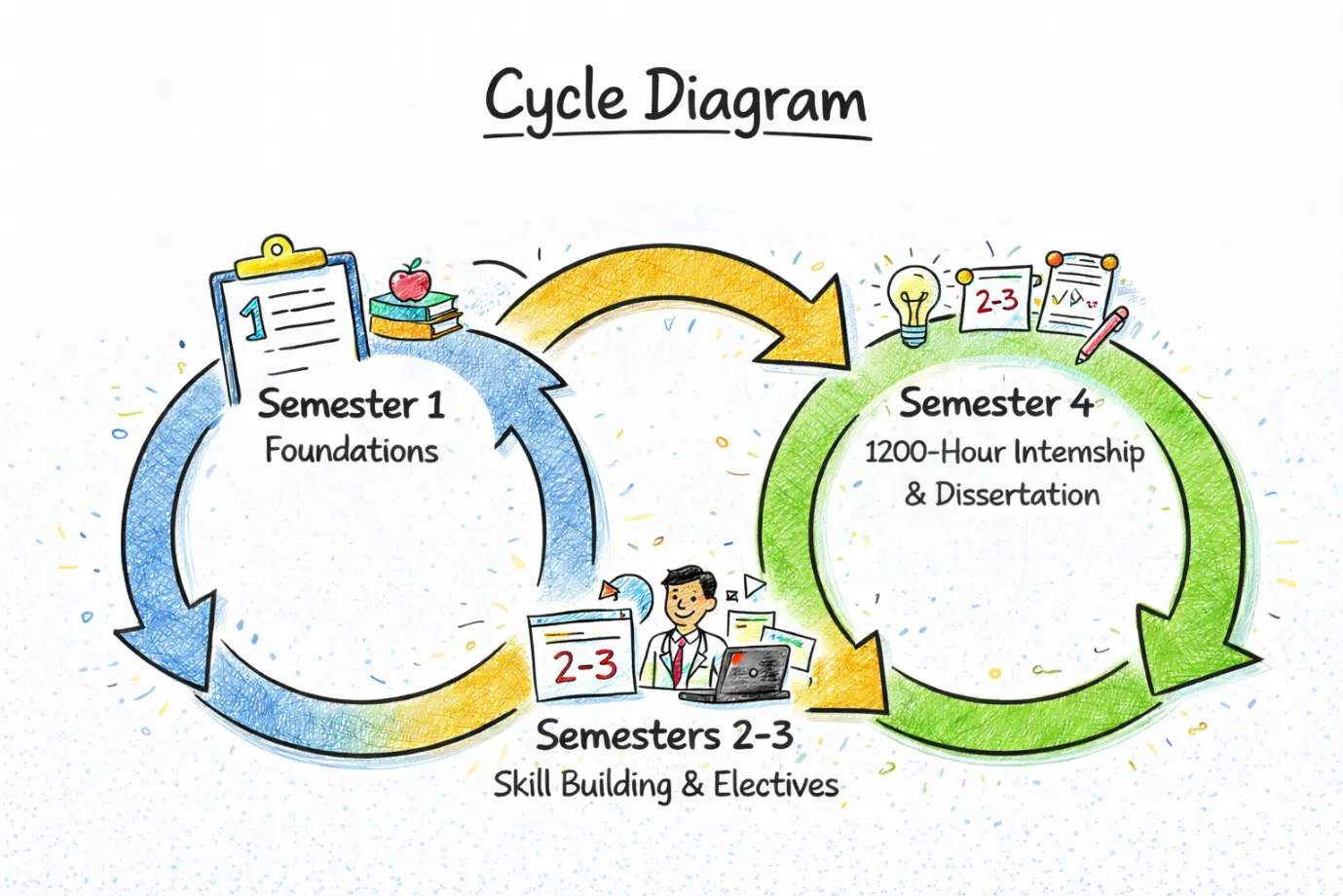
- Semester 4 Focus: The final semester is entirely dedicated to competency building through a structured internship and a compulsory research dissertation.
- Research Rigor: Students must navigate ethical approvals and data analysis, ensuring they meet national standards for evidence-based practice.
Attendance and Professionalism To ensure students are industry-ready, a strict 75% attendance record is mandatory for every subject. This ensures that the competencies required for professional registration are fully met through consistent participation.
Will NCAHP Help You Get Registered, Employed & Recognised as a Dietitian? Scope, Career opportunities and Salary
Securing Your Professional Identity The most common question students ask is: "Will I be recognized?" The answer is a resounding yes. NCAHP alignment ensures your degree is recognized by the National Commission, allowing you to register on the national portal. This registration serves as your official "license," proving you have met the rigorous competency-based curriculum requirements.
Diverse Career Pathways The scope for nutrition professionals is expanding beyond traditional hospital roles:
- Clinical Nutrition: Working in ICUs or specialized centers (Pediatrics, Oncology, Renal).
- Community Health: Roles in NGOs, ICDS, and government programs like the National Nutrition Mission.
- Food Industry: Product development, food safety assessment, and quality management.
- Sports & Research: Working with sports academies or in nutrigenomics labs.

Salary Prospects While salaries vary by skill and location, indicative ranges for nutrition professionals are:
- Entry Level: ₹3,00,000 – ₹3,60,000 per annum.
- Mid-Level: ₹5,60,000 – ₹6,00,000 per annum.
- Expert/Specialist: ₹8,00,000 – ₹12,00,000 per annum.
FAQs: Everything You Need to Know About the Master of Nutrition and Dietetics at SSCANS
1. Who is eligible to apply? Candidates must have passed a Bachelor’s of Nutrition and Dietetics (Honours) or B.Sc. Food and Nutrition in regular mode from a recognized university. Please note that degrees in general Life Sciences, MBBS, Nursing, or Chemistry are not eligible for this specific professional pathway under NCAHP. However, a Home Science degree with a specialization in Nutrition and Dietetics (Honours) is considered eligible as per NCAHP regulations.
2. What are the key admission dates for 2026?
- Registration Opens: Monday, 24th February 2026.
- Last Date to Apply: Sunday, 2nd August 2026.
- Programme Starts: Monday, 13th July 2026.

3. What is the selection process? Selection is strictly merit-based. After an initial eligibility check, candidates undergo a virtual entrance exam, a group exercise (GE), and a personal interaction (PI). Evaluation criteria include your entrance test score (scaled down to 50), undergraduate academic performance, general aptitude, subject knowledge, and communication skills.
4. What are the total fees? The comprehensive academic fees for the two-year program are approximately ₹4,40,400. This includes a refundable institute deposit of ₹20,000 but does not include hostel and mess charges.
5. Is the course available online? No. To meet the 1200-hour clinical and practical training requirement mandated by the NCAHP, this is a full-time, on-campus program. There are no weekend, remote, or distance learning options available.
6. Does the institute provide hostel facilities? Yes, separate fully-furnished hostels for boys and girls are available on a first-come, first-served basis at the scenic Lavale campus. The facility includes 24/7 security, high-speed Wi-Fi, and a mess providing four nutritious meals daily.
7. I am currently in my final year of graduation; can I still apply? Yes, final-year students may apply during their sixth semester. Admission will be provisional and is subject to the candidate obtaining a minimum of 50% marks (45% for SC/ST) upon the successful completion of their Bachelor’s degree.
8. What is the annual student intake for the MND programme? The annual intake for the Master of Nutrition and Dietetics (MND) programme is 60 students.
9. Are there any scholarships or financial aid options? Yes, deserving meritorious students with academic excellence are offered scholarships and awards through the Symbiosis Society Foundation. Additionally, educational loan facilities are available for students at SSCANS.
10. Can I pay the academic fees in installments? Upon admission, an initial payment of ₹1,30,000 is required. The remaining balance of the academic fees is settled in installments across each semester.
11. Is there an age limit to apply for the programme? The candidate should be at least 17 years old as of 31st December of the year of admission.
12. Are there management quota seats available? No, there are no management quota seats for this programme.
13. How do international students apply for this course? The admission process for international students is facilitated through the Symbiosis Centre for International Education (SCIE).
14. What are the attendance and academic requirements to pass? Students must maintain at least 75% attendance in each subject to avoid "Course Not Granted" (CNG) status. Additionally, students must clear internal assessments with a minimum of 40% marks and maintain a semester CGPA above 4.
Your Comprehensive Guide to the Master of Nutrition and Dietetics at SSCANS: Admissions, Curriculum, and Campus Life
Embarking on a Master of Nutrition and Dietetics (MND) is a significant step toward becoming a recognized healthcare professional in India. At the Symbiosis School of Culinary Arts and Nutritional Sciences (SSCANS), this program is meticulously designed to blend the rigorous science of nutrition with practical clinical expertise. As the field evolves under the National Commission for Allied and Healthcare Professions (NCAHP) Act, here is everything you need to know about joining the 2026 cohort.
1. Eligibility: Are You the Right Fit?
The eligibility landscape for nutrition professionals has shifted significantly to ensure a "One Nation, One Curriculum" approach. SSCANS strictly follows these professional standards:
- Mandatory Qualifications: Candidates must have a Bachelor’s of Nutrition and Dietetics (Honours) or a B.Sc. Food and Nutrition completed in regular mode from a recognized university.
- Specific Exclusions: Students with degrees in general Life Sciences, MBBS, Nursing, BHMS, BAMS, or Chemistry are not eligible for the Master’s in Nutrition and Dietetics.
- Home Science Exception: A degree in Home Science is acceptable only if it includes a specialization in Nutrition and Dietetics (Honours).
- Academic Standing: A minimum of 50% marks (45% for SC/ST) in your undergraduate degree is required.

2. The Admission Journey: Steps and Key Dates
Admissions at SSCANS are merit-based, evaluating academic history alongside performance in a specialized selection process.
The Step-by-Step Process:
- Online Registration: Register on the official portal with a non-refundable fee of INR 1500.
- Eligibility Check: The institute verifies your undergraduate credentials against NCAHP standards.
- Entrance & Interaction: Eligible candidates undergo a virtual entrance exam, a group exercise (GE), and a personal interaction (PI).
- Merit Listing: Evaluation is based on your entrance score (scaled to 50), undergraduate marks, subject knowledge, and communication skills.
Important Dates for 2026:
- Registration Begins: Monday, 24th February 2026.
- GE-PI Dates: Saturdays between April 11th and June 27th, 2026.
- Last Date to Apply: Sunday, 2nd August 2026.
- Programme Commencement: Monday, 13th July 2026.
3. Programme Curriculum: A Deep Dive into Learning
The M.Sc. Nutrition and Dietetics is a two-year, full-time program divided into four semesters. It is explicitly designed to be practical-heavy, focusing on "experiential learning."
- Credit Structure: Students complete 20 credits per semester. The program uses a 60:40 ratio for continuous assessment versus term-end exams, prioritizing laboratory and field performance.
- NCAHP Alignment: The curriculum mandates that 50% of total credits are dedicated to supervised clinical training, totaling between 1000 and 1200 hours.
- Specialized Practical Work: Core laboratory work covers nutritional biochemistry, food product development (FDP), and medical nutrition therapy (MNT).
- The Final Semester: Semester 4 is entirely focused on competency building through a compulsory research dissertation and a structured internship in hospitals or food industries.
4. Life at Lavale: Hostel and Mess Facilities
Choosing SSCANS means living at the Symbiosis Knowledge Village in Lavale, a vibrant residential campus.
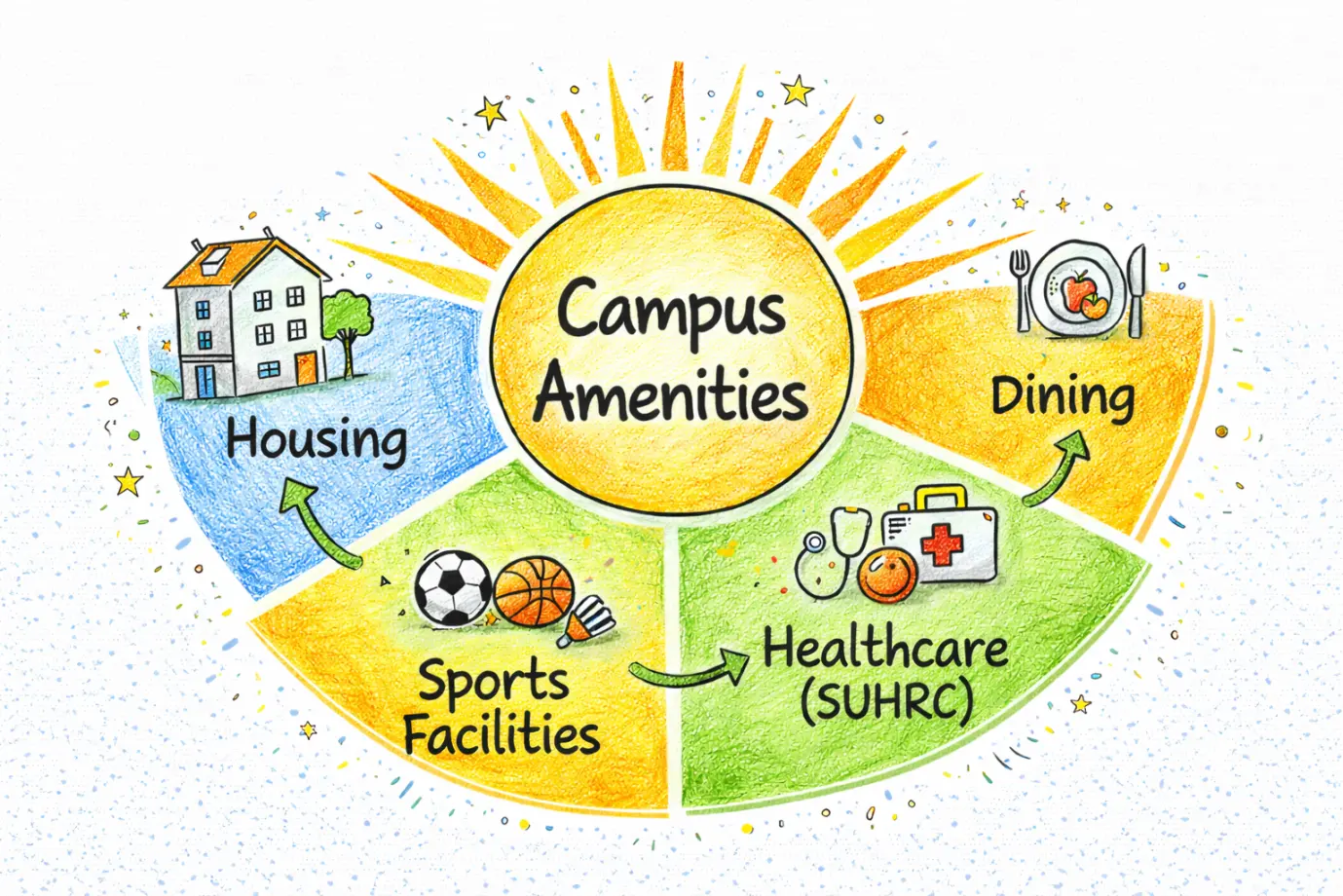
- Hostel Comforts: Fully furnished separate hostels for boys and girls include a bed, study table, and safe cupboard. High-speed Wi-Fi is available throughout the campus.
- Nutritious Dining: The mess provides four healthy meals a day. Additional eateries like "SymbiEat" offer various dining options.
- Health and Wellness: The campus houses the Symbiosis University Hospital and Research Centre (SUHRC), ensuring state-of-the-art healthcare is always accessible.
- Recreation: Students have access to a gymnasium, swimming pool, and courts for badminton, squash, and basketball.
- Strict Standards: A strict code of conduct for "No Smoking/Alcohol" and "Anti-Ragging" is practiced to ensure a safe learning environment.
5. Investment and Support
The academic fees for the two-year program are approximately ₹4,40,400, inclusive of a refundable institute deposit. An initial payment of ₹1,30,000 is required upon admission, with the balance settled semester-wise. Meritorious students may also be eligible for scholarships through the Symbiosis Society Foundation.